
En el Día de la Mujer Trabajadora  <3
<3

Many European folk beliefs and traditions are widespread from Britain clear to Russia. They simply have some variation, different names, etc. Obviously each culture is unique, but they are also related.
<3
#herbwife #homedweller #earthworking #firealchemy #TheSacredFire #TheSacredHearth #fireandsmoke #HouseholdSpirits #TheTraditionofHouseholdSpirits #HouseholdMagic #Ancestors #AncestralLore #TheFae #Threshold #HouseElvesPixiesFairiesWitches #TheHouseElf #TheKitchenWitch #KitchenWitchcraft #HedgeWitchcraft #FolkLore #HERBlore #HERitage

Many European folk beliefs and traditions are widespread from Britain clear to Russia. They simply have some variation, different names, etc. Obviously each culture is unique, but they are also related.
In her “European Mythology,” premier scholar on European folk tradition, Jacqueline Simpson, says that European folk custom is “pretty consistent throughout Europe, despite political and linguistic barriers” (p8). Therefore this article discusses folk beliefs and customs related to the European household that are found throughout Indo-European cultures.
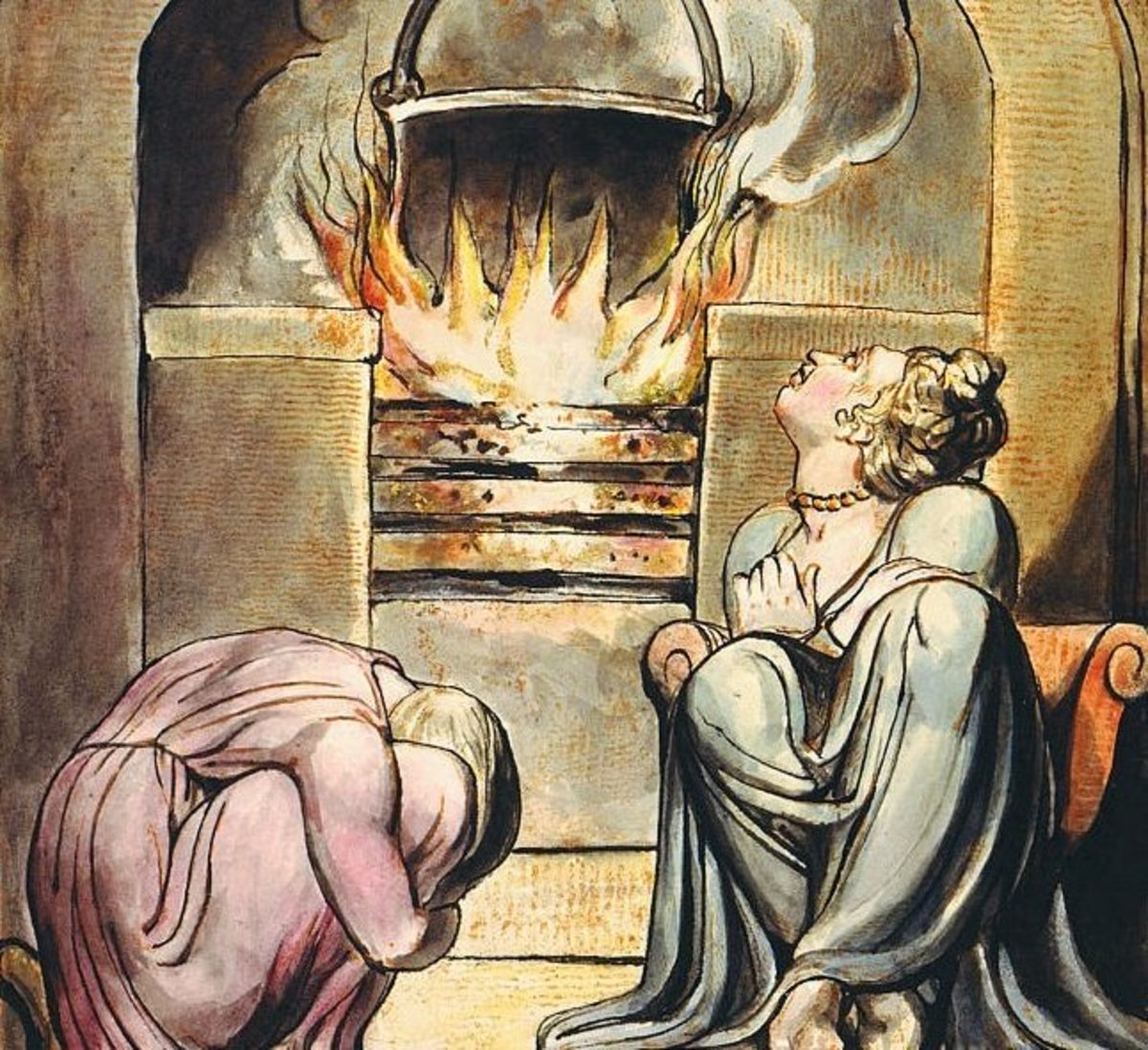
A cauldron over a fire in William Blake's illustrations to his mythical "Europe, a Prophecy," first published in 1794.
The old European worldview originating in paganism, but continuing on under Christianity in some cases into the 20th century, was a magical one. People believed that spirits interacted with them and interceded in their lives for good and for ill. For most people in the past, life revolved around the homestead, and so it shouldn't be surprising that certain spirits, deities, beliefs, and rituals evolved around the home
{In the earliest times, it may be that the priest class held the secret of fire, tending eternal flames in temples in many ancient cultures.}

Thatched croft house in South Lochboisdale, Scotland. Photo by Tom Richardson, WikiCommons.
The Sacred Fire
Fire is one of the most primitive spiritual symbols of mankind because it was so essential to our survival. The concept of a sacred fire is found worldwide, but especially in colder Northern climates. The Celts are famous for their fire festivals at key times of the year, such as Beltane (May Day) and Samhain (Halloween). However, virtually all other European peoples also had fire festivals and often at the same times of year, including the Germanic, Baltic, and Slavic groups.
In the earliest times, it may be that the priest class held the secret of fire, which is why a tradition of eternal flames tended to in temples is found in many ancient cultures from Greece to Ireland. In fact, the Oxford Dictionary of Celtic Mythology, by James MacKillop, mentions several important places where fire is relevant in Celtic myth.
One story that reveals an ancient memory of fire is recorded in the Irish mytho-history, the Lebor Gabala (Book of Invasion). The ancient text says that a chief druid called Mide lit the very first fire in Ireland at Uisnach. This same fire is said to have burned continuously for seven years and torches lit from it were carried to light the hearth fires of all the chiefs in Ireland (p235).
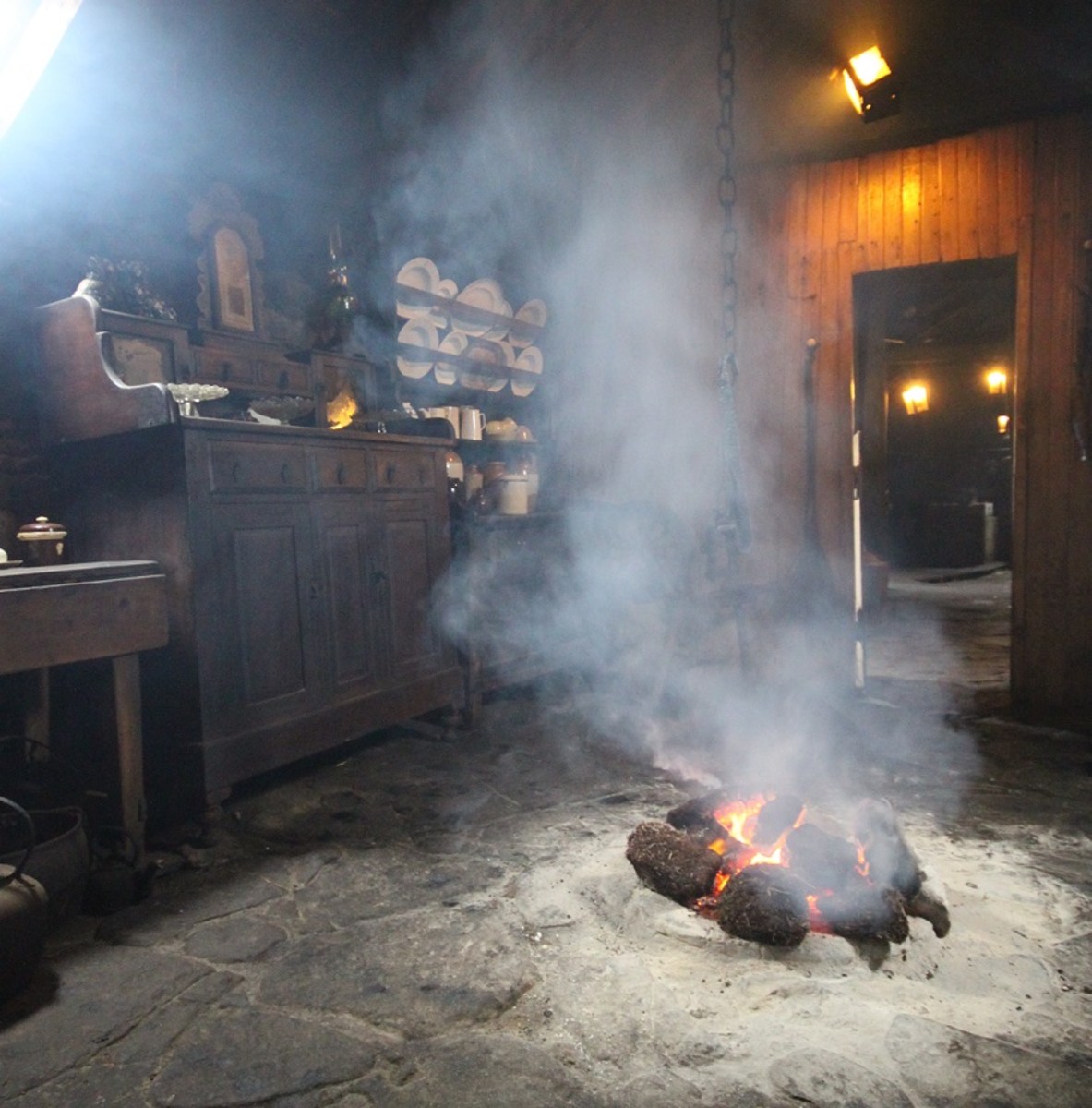
Celtic Blackhouses kept large peat fire in the center of the home.The smoke dissipates out through the thatched roof without a chimney. Photo by Nessy-Pic on WikiCommons.
{As time moved on and fire became a part of normal life it became associated with women and the home.}
So, it seems clear that in very primitive eras when the “magic” of fire was not well understood, it was associated with “magicians” such as the druids.
But, as time moved on and fire became a part of normal life, it began to develop an association with women and the home. Often sacred eternal flames were tended to by female priestesses, such as the Greek Vestal Virgins who guarded the sacred fire of Vesta. It is well known that the Irish Catholic Saint Brigid was adapted from the pagan goddess, also called Brigid. The goddess Brigid was associated with fire, and an eternal flame was kept by Saint Brigid's devotees, the nuns of Kildare, well into the Christian era.
It likely is no coincidence that these so called eternal flames were tended to by women. In the traditional European family, the woman's work typically revolved around the homestead while the man was doing more labor intensive work elsewhere. So, the matriarch of the house tended the family hearth fire, which was essential for the livelihood of the home.
This is precisely why the imagery of the cauldron over a fire is synonymous with the archetype of the female witch. These were everyday use items in the household, the worldview of the day believed in magic, and the hearth was associated with strong spiritual connotations.

A druid performing a sacred ritual involving fire and smoke for the Celtic Queen Maeve. Art by Stephen Reed, 1904
Household Deities
There are two main types of household deities, and the first is generally known as the Hearth Goddess. She's usually a deity associated with the domestic sphere, women's issues, and honored at the house fire. The Norse Frigga, German Holle, Greek Hestia, Roman Vesta, Slavic Mokosh, and Celtic Brigid are some of the most well-known European goddesses found in this category.
Some hearth goddesses are associated overtly with fire, such as Brigid and Vesta, while others are associated with domesticity in general. Women’s work that was done around the homestead was often overseen by the hearth goddess. This work did not have the negative connotation that is sometimes applied to the term “women's work” today. The work done by women was just as crucial as that done by men. Just as women often lacked physical strength necessary for the hard labor chores done by their husbands, the large hands of men often were less adept at work requiring intricate fingering, such as processing raw fibers into yarn and textiles.

"Frigga and the Beldame" by Harry George Theaker, 1920
{The work done by women was just as crucial as that done by men.}
Without textiles, the family is not clothed and the beds have no blankets, as well as the myriad of other uses that made fabric a household necessity. Spinning and weaving could also provide an income source, so it was every bit as valuable to the household as any other chore. It is very common to see domestic goddesses depicted with a spinning wheel, and we see this in the Norse Frigga, German Holle, and Slavic Mokosh. It has been noted that pagan goddesses often lived on in folk belief and fairy tales, albeit diminished from their former role of goddess. The Lowland Scots fairy tale called Habitrot depicts a fairy godmother type figure associated with spinning who appears to be a vestige of a pre-Christian domestic goddess.

Frigga, by Helen Stratton, 1915
The House Elf
The other type of household deity is typically the male guardian of the property. Known as tutelary spirits, these guardians are thought to have originated as the male ancestor who first owned the property and whose spirit lingered on to guard it. In time, this evolved into the house elf tradition which lingers on profoundly in Teutonic culture from Scandinavia and Germany to England and Lowland Scotland.
I wrote another article about the mischievous side of these spirits (When Brownies Turn Bad) which contained a great deal of information on them, so I won’t go into too much detail here. But it is worth pointing out that these domestic spirits were thought to be tied to the luck and well-being of the household and family.
They were honored and propitiated with offerings of food, and in return they brought good fortune and prosperity by helping with the chores around the homestead. This would often be farm chores, but they might help with a profession run from the home as seen in the famous fairy tale “The Shoemaker and the Elves.”
{Domestic spirits were thought to be tied to the luck and well-being of the household and family.}
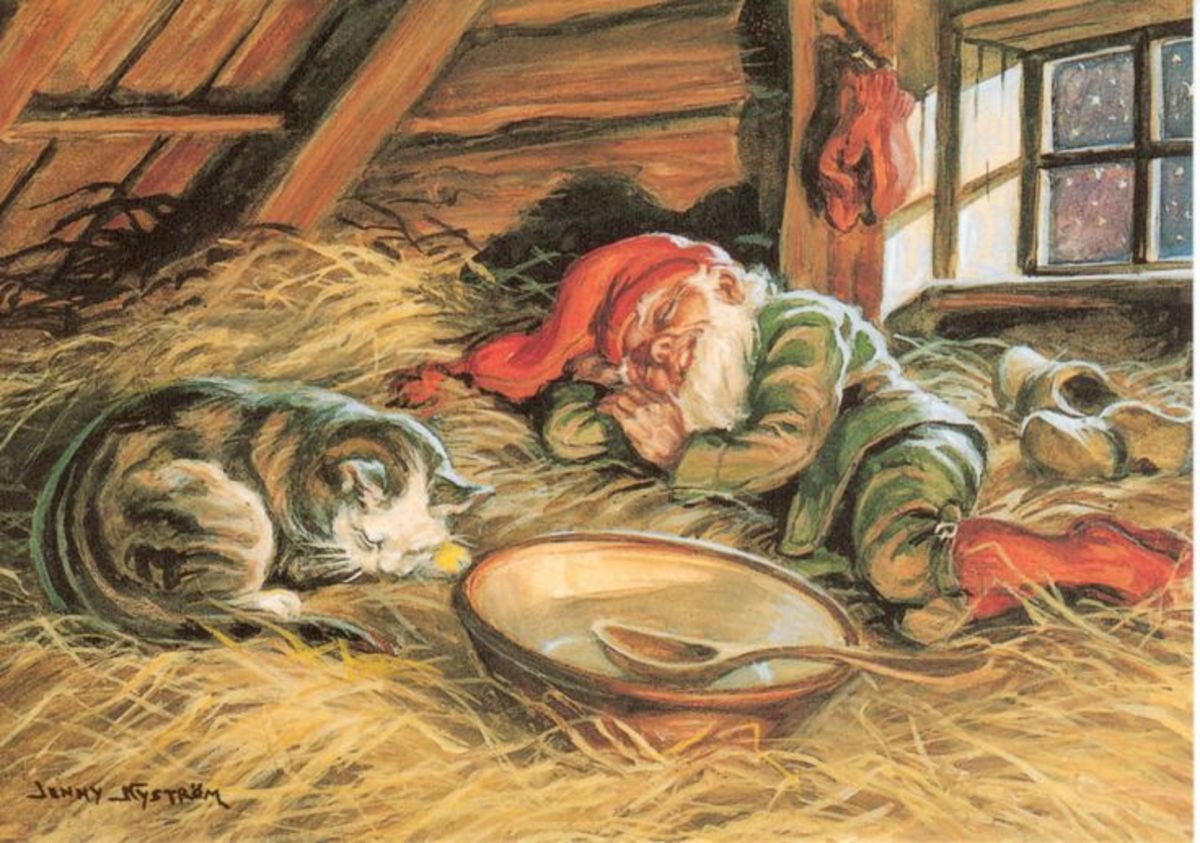
Art by Jenny Nyström
The House Snake
Another domestic tutelary deity seen in parts of Northern Europe, especially in Germanic areas, was the house snake. Unlike the house elf, which was a spirit, this deity was a living corporeal snake that lived in the family home, somewhat like a pet. It is not clear if this custom hearkens back to very ancient serpent worship tradition, as those tend to be seen more frequently in warmer climates.
My best guess was that the snakes were kept for the same reason cats were domesticated – vermin control. Snakes and cats kill rodents which carry disease. Less rodents means higher likelihood of a healthy family in those days, as well as healthy livestock which directly translated into prosperity.
So, it makes sense that in the context of a superstitious society which viewed their world in terms of magic, that a snake in the home could be seen as a symbol of good fortune which attributed it with spiritual value.
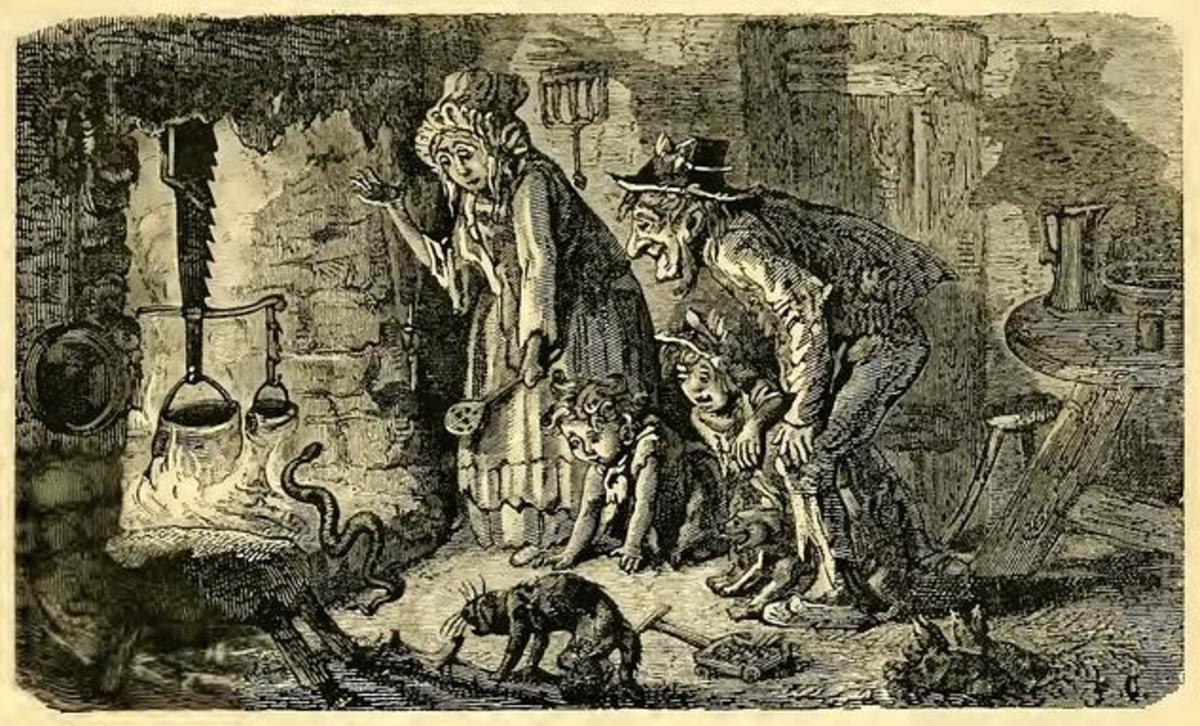
A snake in the home of a European family. Ernest Griset, circa 1870s.
Places of Power in the Home
We have already discussed the hearth as a part of the house which held spiritual significance. This seems to be greatly influenced by its connection with fire. But, the hearth is also symbolically connected to women, and women were the sex who were generally considered to be the carriers of magical tradition in the home.
There are still lingering vestiges of hearth and kitchen imagery in modern traditions. The “kitchen witch” is a common motif in German households, and one finds little figurines of witches on brooms in many German kitchens. On the Eve of the first day of May, Germans celebrate Walpurgisnacht, a holiday with strong associations to witchcraft. This festival is typically celebrated with bonfires… not unlike the Celtic fire festival of Beltane, held at the same time.
{The “kitchen witch” is still a common motif in German households.}
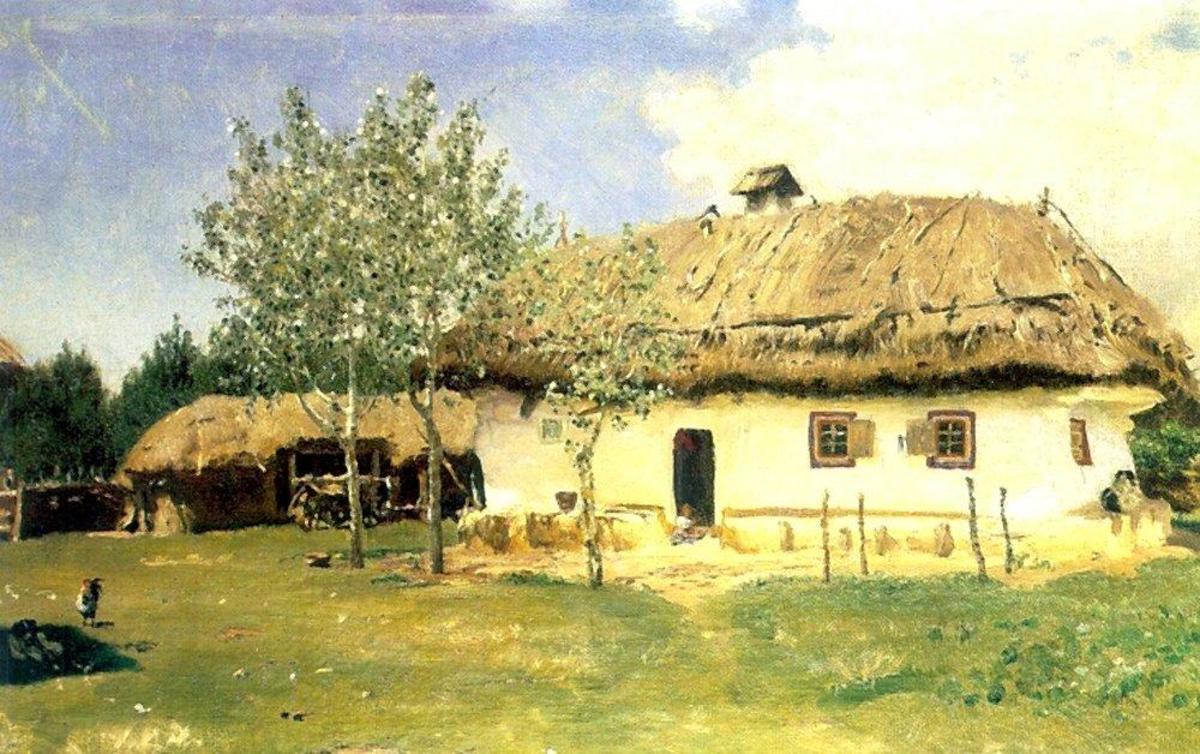
Ukranian peasant's house by Ilya Repin, 1880
The Sacred Hearth
We see the hearth make an appearance in modern day Christmas lore, as well. It is well known that much of the Santa Claus lore developed in America, however, it was heavily influenced by Old World traditions.
There is a lot of debate on which figures influenced Santa Claus. My opinion is that he is an amalgam of many influences, and thus it would take a separate article to suss that out. Suffice to say that it seems clear that the house elf custom is one of those influences. Cookies and milk are left out for Santa in the same way that house elves were propitiated by leaving food out for them – their favorite being grain based food (cereals, baked goods, etc) and milk.
The fact that Santa arrives through the chimney into the hearth is another clue that he is a modern figure with ancient origins. Since we don’t always have traditional appliances in our homes today it can be easy to forget that the chimney would typically have been connected to the main fireplace in the home.
Unlike today’s fireplaces meant for cozy evenings in front of the telly, in a modest traditional home very often there was no separate kitchen and living room, but one main living space with a hearth for both heating and cooking in the center. So Santa’s arrival through the chimney is a nod to the ancient idea that the hearth held mystical connotations and was a place of spiritual activity.

It is easy to see the connection between Santa and House Elves in early depictions of "that jolly old elf" - before Santa's modern image was fully developed. By Arthur Rackham.
{The fact that Santa arrives through the chimney into the hearth is another clue that he is a modern figure with ancient origins.}
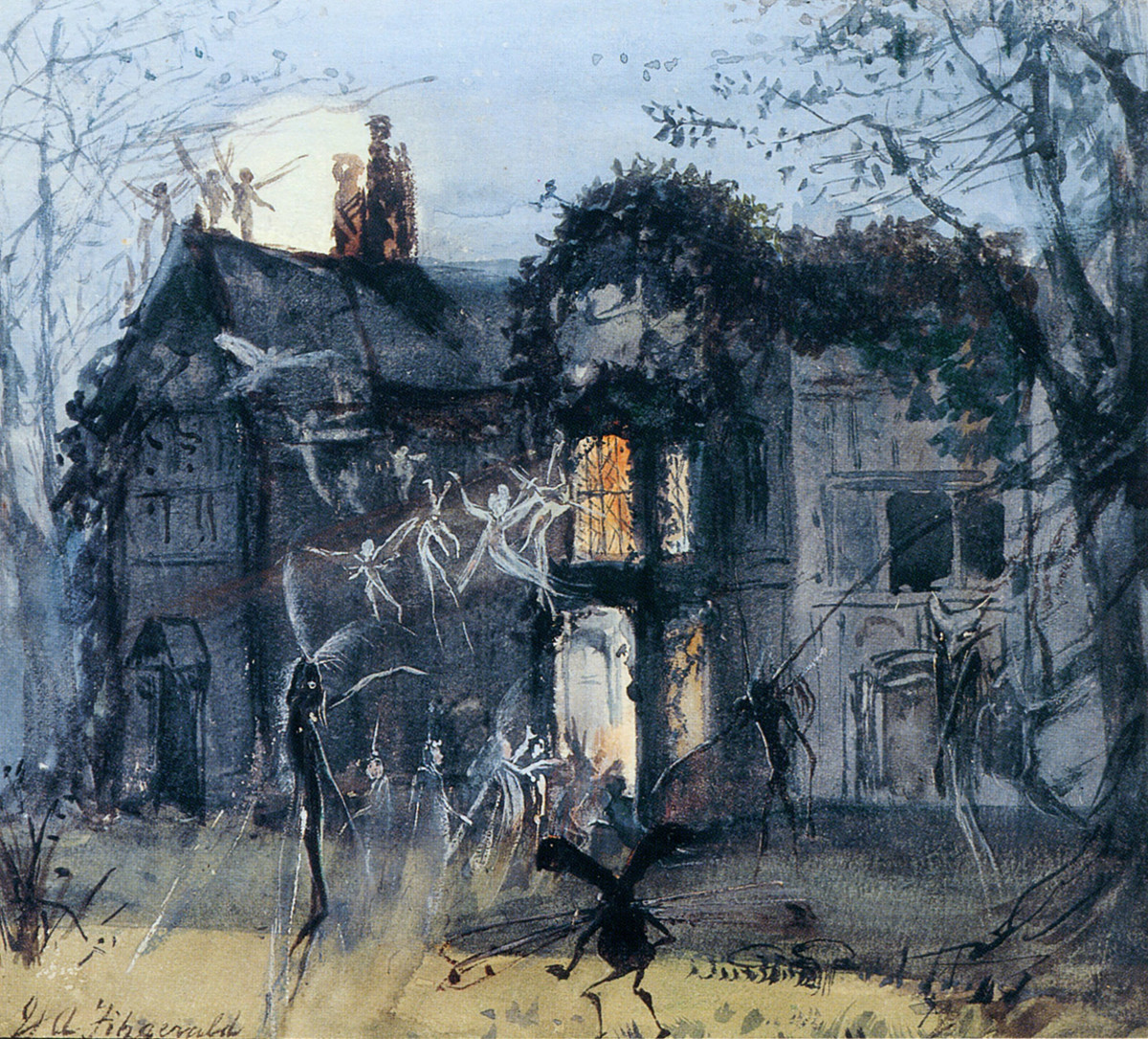
The Old Hall, Fairies by Moonlight; Spectres & Shades, Brownies and Banshees. By John Anster Fitzgerald, circa 1875
{The house is not only a barrier to the elements, but it also shields its inhabitants from malevolent spiritual forces.}
Doorways for Spirits
French scholar Claude Lecouteux conducted an intensive study on European household spiritual beliefs for his book “The Tradition of Household Spirits.” He states that under common Indo-European belief, “the house forms a protective cocoon, one that is sacred and magical” (p48).
In other words, the house is not only a barrier to the elements, but it also shields its inhabitants from malevolent spiritual forces. This concept relates both to the rituals of house blessings and even to ancient hospitality customs.
Because the walls and roof of a home formed physical barrier that blocked both the physical and supernatural world from entering, openings came to be seen as portals through which spirits could enter the home. As explained above, the chimney was one of these portals, as well as the more obvious doors and windows. Therefore charms, amulets, blessings, and rituals were often placed or recited at doorways and windows.
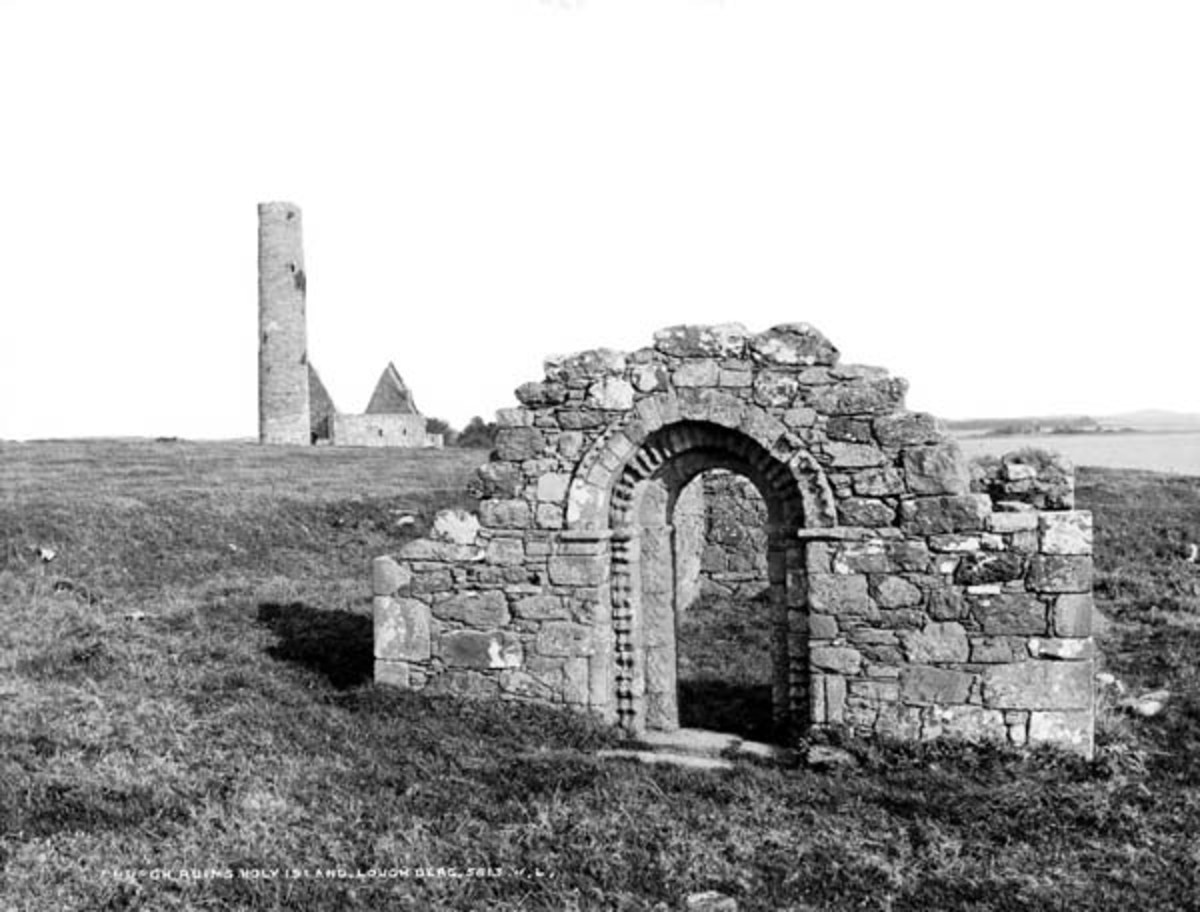
Only the doorway remains of the Holy Island Church Ruins, Lough Derg, Co. Clare. Photo circa 1880-1914
Threshold Tradition
Another conspicuous place in the home was the threshold. Obviously this is tied to the concept of the door as a portal, but also as an especially sacred part of the entryway. The earliest homes had only one door and no windows. Even chimneys were a later addition, as very early homes let smoke simply escape through thatched roofs.
So the doorway as a sacred place in the home has a very strong and ancient origin. In addition to amulets placed over the door, vows were often sworn over the threshold, offerings to tutelary spirits could be poured over the threshold. And, just as hearth lore has carried on into modern times, we see the sacred nature of the threshold live on in the custom of the bridegroom carrying his new bride across it.
Blessings Charms, and Amulets
Jacqueline Simpson describes the relationship between humans and the spirit world as a sliding scale between malevolent and benevolent. And so folk customs developed as ways to nurture positive relationships with helpful spirits as well as protective rites to ward off evil ones. We discussed the protective tutelary spirits who guarded the home and that they would be propitiated with offerings to encourage future prosperity.
In Germany, a figurine of the Kobold (house elf) was often kept by the hearth. This tradition lives on in the popularity of gnome figurines in German households to this day. The house snake tradition evolved in Scandinavia where it became customary to bury the body of a snake under the threshold for good luck in the home.
Inscriptions beseeching the spiritual realm for blessings and luck are common in households worldwide. Today we see plaques or cross stitch designs that say “Bless This House” quite commonly in people's homes. These signs are still most commonly found above the main doorway and inside the kitchen.
{The iron hearth cricket ties the magic of the hearth with the magic of iron combined with the figure of a protective spirit.}
Protective Abilities of Iron
Certain materials were thought to be protective, especially iron. The concept of iron as a material of power is an ancient one. The art of smithing, like the earlier skill of harnessing fire, was initially seen as quite magical.
It was a skill that the average person lacked, but the wider community came to depend on their smithies for tools and weaponry. Metalworking represents man's dominance over the elements, and as such, iron took on very mystical connotations in the common imagination. It turns up as a protective amulet in fairy lore from Celtic and Anglo Britain clear to Russia.
Therefore, iron became a common protective amulet inside the home. A horseshoe over the door for good luck hangs there more for the material it was made of than for its shape. Simple iron nails could be placed over doorways and windows as well.
Up into modern times it was very common for people to keep figurines made of iron by their hearthsides. The cricket was a common one, and many readers will remember black cast iron crickets on their own grandparents' fireplaces. The iron hearth cricket ties the magic of the hearth with the magic of iron combined with the figure of a protective spirit.
Keep Our Traditions Alive
So many of our traditions have roots so very ancient that their origins trace to times in the very distant past. Sometimes it's easy to think we can't relate to people so primitive that fire was sacred to them.
Yet, we find ourselves repeating some of the same customs that originated with our prehistoric ancestors. These customs tie us to our families, our ancestors, our roots, and cultural past.
Whether we believe they hold magical power or not, or that spirits linger in our midst, why not revive some of these traditions? It's a way to honor our heritage, and inviting in a bit of good luck never hurts.

A modern example of a cast iron cricket for the hearthside.
https://owlcation.com/humanities/European-Household-Magic
For more like this
Please follow me on Facebook to me alerted when new articles come out.
http://hubpages.com/@carolynemerickBibliography
Leach, Maria. Funk & Wagnalls Standard Dictionary of Folklore, Mythology, and Legend. New York: Harper Collins, 1972.
Lecouteux, Claude. The Tradition of Household Spirits: Ancestral Lore and Practices. Rochester, Vermont: Inner Traditions, 2000.
MacKillop, James. Oxford Dictionary of Celtic Mythology. Oxford: Oxford University Press, 1998.
Miller, Joyce. Magic and Witchcraft in Scotland. Musselburgh: Goblinshead, 2004.
Simpson, Jacqueline. European Mythology. London: The Hamlyn Publishing Group, 1987.


